This course is aligned with ACRA’s Sustainability Reporting Body of Knowledge (SR BOK).
You will be automatically enrolled on The Green Pulse, a biannual newsletter by ISCA.
Programme Outline
The objective of this course is to equip working professionals with the knowledge and applied skills required to support the preparation of sustainability reports. Learners will develop an understanding of key sustainability reporting requirements and concepts, including IFRS S1, IFRS S2, GHG Protocol, and governance considerations and apply these concepts to practical reporting scenarios to demonstrate competency in sustainability reporting.
Upon completion, participants will be able to:
- Explain key sustainability, ESG, and climate-related concepts, including global, regional and Singapore developments and their implications for business, finance and regulatory expectations;
- Analyse key sustainability reporting requirements and frameworks, including IFRS S1, IFRS S2, GRI, ESRS, SASB and CDP, to determine relevant disclosure considerations for an organisation;
- Apply sustainability reporting principles to prepare credible and decision-useful disclosures, including materiality assessment, governance, strategy, risks and opportunities, metrics and targets;
- Apply GHG Protocol requirements to determine reporting boundaries, identify Scope 1, Scope 2 and Scope 3 emissions and support the preparation of emissions-related disclosures; and
- Develop practical recommendations for sustainability reporting implementation, including stakeholder engagement, communication of ESG information, assurance-readiness, climate risk responses and net-zero transition planning.
Course Module, Duration and Mode of Delivery
Module | Title | CPE Category | Hours | Mode of Delivery |
101 | Overview - Sustainability, Business and Finance | Category 1 | 5 | e-Learning |
102 | Introduction to Climate Risk, Opportunities and Reporting | Category 1 | 5 | e-Learning |
103 | Sustainability Reporting I | Category 1 | 8 | e-Learning |
104 | Sustainability Reporting II | Category 1 | 10 | e-Learning |
107 | Social Sustainability | Others | 1 | e-Learning |
201 | Deep Dive into Climate Reporting | Category 1 | 19 | e-Learning |
301* | Capstone Module for ISCA Sustainability Professional | Category 1 | 21* | In-person |
| Total | | 69 | |
Detailed Module Coverage
Module | Module Coverage |
101: Overview - Sustainability, Business and Finance | - Overview of Sustainability & Sustainability Developments
- Sustainable Development Goals (SDGs)
- Understanding ESG in the context of a business organisation
- Circular economy
- Nature and biodiversity
- Impacts of climate change on Financial Institutions
- Green and sustainable finance, including roadmap for businesses to obtain green and sustainable finance
- Role of accountants in Sustainability
|
102: Introduction to Climate Change & the Business Case for Decarbonisation
| - What is GHG and Climate Change
- GHG and climate change
- Key developments & global outlook
- Impact of climate change in SEA and ASEAN
- Singapore’s response to climate change
- Business goals for decarbonisation
- Singapore's net-zero transition
- Singapore 2035 Nationally Determined Contribution (NDC)
- Singapore Carbon Pricing Act
|
103: Sustainability Reporting I | - Introduction to sustainability reporting
- Components of a sustainability report
- Overview of key sustainability reporting standards, including
- European Sustainability Reporting Standards (ESRS)
- Global Reporting Initiative (GRI)
- International Sustainability Standards Board (ISSB)
- IFRS Sustainability Disclosure Standards (IFRS SDS)
- Corporate Sustainability Reporting Directive (CSRD)
- Sustainability Accounting Standards Board (SASB)
- Formation of the International Sustainability Standards Board (ISSB)
- Key principles of IFRS S1 and S2 and interoperability with other international standards
- Sustainability reporting developments
- Growing compliance requirements in Asia
- State of Sustainability Reporting in US and EU
|
104: Sustainability Reporting II | - Sustainability Reporting Implementation Plan
- Reporting principles and effective communication
- Internal review and external assurance
- Assurance for IFRS S1 & S2
- Sustainable investing
- ESG rating and its relationship with sustainability reporting
- Role of digital technology in ESG reporting
- Greenwashing and Greenhushing
|
107: Social Sustainability | - Importance of incorporating ESG into the business
- Definition of “S” in ESG
- Scope of coverage of the indicators
- Sustainable Philanthropy Framework and its relationship with globally recognised framework
|
201: Deep Dive into Climate Reporting | Climate Reporting - Practices and Trends - TCFD
- IFRS S2
- Carbon Disclosure Project (CDP)
Climate Risk and Resilience - Climate risks and opportunities
- Financial impacts of climate-related risks and opportunities
- Climate scenario analysis
- Climate governance
GHG Accounting and Quality Control - GHG Protocol
- Boundaries and Scope of GHG Inventory
- Accounting for Scope 1, 2 and 3 GHG emissions
- GHG inventory management and verification
Fundamental Principles of Organisational Climate Strategy - Net-Zero target setting
- Science-Based Target Initiative (SBTi)
- Determining target boundaries for Scope 1, 2 and 3
- Types of emissions reduction targets
- Carbon Mitigation Hierarchy
- Strategy for Decarbonisation
- Evaluate and optimise GHG emissions monitoring and reporting
- Corporate Climate Credibility
- Climate Transition Action Plan
- Transition Planning Framework
Carbon Credits, Markets and Ecosystem - Carbon offsets vs carbon credits
- High-quality carbon offset project
- Renewable energy certificates (RECs)
- Carbon markets and ecosystem
- Carbon credit ecosystem
- Opportunities and challenges of the carbon market
- Singapore’s role as a hub for carbon trading services
- Future outlook of the carbon market
|
301: Capstone Module for ISCA Sustainability Professional*
-------------- Schedule 1
Date and Time (9am - 5pm):
7 May 2026 (D1)
8 May 2026 (D2)
18 May 2026 (D3) Schedule 2
Date and Time (9am - 5pm):
11 Jun 2026 (D1)
12 Jun 2026 (D2)
22 Jun 2026 (D3) Schedule 3
Date and Time (9am - 5pm):
24 Sep 2026 (D1)
25 Sep 2026 (D2)
5 Oct 2026 (D3) Schedule 4
Date and Time (9am - 5pm):
22 Oct 2026 (D1)
23 Oct 2026 (D2)
2 Nov 2026 (D3) Schedule 5
Date and Time (9am - 5pm):
10 Dec 2026 (D1)
11 Dec 2026 (D2)
21 Dec 2026 (D3) ---------- | The 3-day in-person capstone will cover the following topics through practical case studies and exercises: - Regulatory updates on sustainability reporting
- IFRS S1 and S2 requirements, with a focus on phased on proportional approaches
- Effective Governance
- Objectives and priorities for sustainability reporting
- Identify, engage relevant stakeholders and aligning for effective collaboration
- Communicating on ESG
- Greenwashing and greenhushing
- GHG accounting (Scope 1, 2 and 3)
- GHG emissions management and reporting
- Climate-related risks and opportunities
- Climate scenario analysis
- Risk assessment
- Strategic responses to manage climate risks and seize related opportunities
- Set metrics and targets
- Enabling conditions for creating value from IFRS S1 and S2 through robust analysis of climate risk as a basis for strategic decision making
- Accounting implications of IFRS S1 and S2
- Net Zero Transition Planning
Overall Assessment (to be completed after the capstone module via remote proctoring) - 80 exam questions to be completed within 120 mins (1 Attempt)
|
Training Methodology
Self-paced e-learning modules, with an in-person capstone workshop and an overall assessment
Closing Date for Registration
1 week before the course start date
Notes*:
- ISCA reserves the right to make changes or improvements to any of the scheduled dates and times described on this page without prior notice.
- There is a group project in the capstone module. More details will be shared during the capstone workshop.
- The capstone module includes a 0.5-hour project presentation by participants.
- Each capstone session is capped at 40 participants.
Intended For
- Accountants and finance professionals
- CFOs and finance leaders
- Risk and compliance professionals
- Sustainability practitioners involved in reporting and disclosures
Schedule & Fees
Date & Time
22 Oct 2026 (9:00 AM - 5:00 PM)
23 Oct 2026 (9:00 AM - 5:00 PM)
02 Nov 2026 (9:00 AM - 5:00 PM)
Registration is closed
Fee (inclusive of GST)
SGD pricing -
For Members:
2,692.30
For Non-Members:
2,692.30
Programme Facilitator(s)
Robert Charnock
Venue
60 Cecil Street
ISCA House
Singapore 049709
Date & Time
10 Dec 2026 (9:00 AM - 5:00 PM)
11 Dec 2026 (9:00 AM - 5:00 PM)
21 Dec 2026 (9:00 AM - 5:00 PM)
Fee (inclusive of GST)
SGD pricing -
For Members:
2,692.30
For Non-Members:
2,692.30
Programme Facilitator(s)
Robert Charnock
Venue
60 Cecil Street
ISCA House
Singapore 049709
Testimonial
Funding
Course Fee & Government Funding
.png?sfvrsn=5dd76892_0&MaxWidth=800&MaxHeight=800&ScaleUp=false&Quality=High&Method=ResizeFitToAreaArguments&Signature=7F1EFA539C0D7F96444CC13F302555367B1F2BDF "Price And Funding 1")
Funding Eligibility Criteria
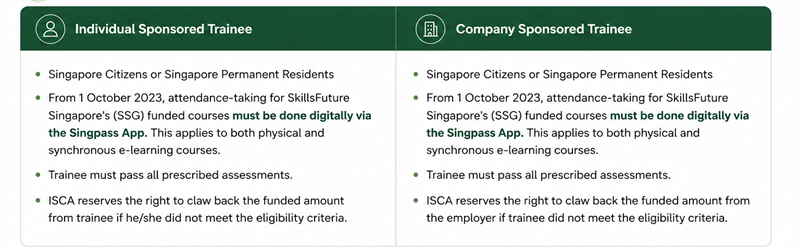
Note
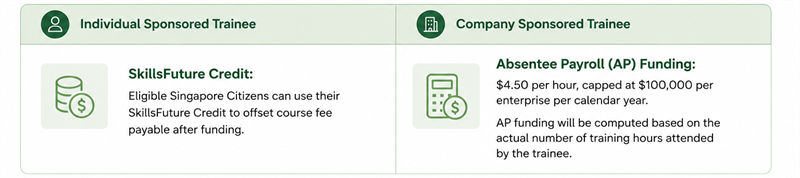
Programme Facilitator(s)
Dr. Robert J. Charnock
Dr. Charnock has specialised in sustainability accounting since 2012, bringing extensive experience from both academia and industry. He earned his Ph.D. in Carbon Accounting from the London School of Economics and Political Science (LSE), based on his work with the United Nations to develop Scope 3 carbon accounting standards for the financial sector. Dr. Charnock also served as a member of the ISSB Technical Reference Panel and has a decade of experience lecturing and teaching financial and management accounting.
Dr. Charnock is leading Metis to drive forward with research into best practice, focusing on three core themes: net-zero transition planning, biodiversity scenario analysis, and ESG for MSMEs. Metis works closely with leading organisations such as WWF, WBCSD, and AICPA-CIMA on transition planning and ESG-related projects.
Metis also has ongoing consulting engagements in collaboration with RSK Group, who part-fund Metis, driving practical applications of their specialist insights. Collaborations typically support RSK’s consultants in developing new methodologies and tackling practical challenges faced by clients at the forefront of climate- and nature-related risk, strategy and disclosure.
This course is aligned with ACRA’s Sustainability Reporting Body of Knowledge (SR BOK).
You will be automatically enrolled on The Green Pulse, a biannual newsletter by ISCA.
Programme Outline
The objective of this course is to equip working professionals with the knowledge and applied skills required to support the preparation of sustainability reports. Learners will develop an understanding of key sustainability reporting requirements and concepts, including IFRS S1, IFRS S2, GHG Protocol, and governance considerations and apply these concepts to practical reporting scenarios to demonstrate competency in sustainability reporting.
Upon completion, participants will be able to:
- Explain key sustainability, ESG, and climate-related concepts, including global, regional and Singapore developments and their implications for business, finance and regulatory expectations;
- Analyse key sustainability reporting requirements and frameworks, including IFRS S1, IFRS S2, GRI, ESRS, SASB and CDP, to determine relevant disclosure considerations for an organisation;
- Apply sustainability reporting principles to prepare credible and decision-useful disclosures, including materiality assessment, governance, strategy, risks and opportunities, metrics and targets;
- Apply GHG Protocol requirements to determine reporting boundaries, identify Scope 1, Scope 2 and Scope 3 emissions and support the preparation of emissions-related disclosures; and
- Develop practical recommendations for sustainability reporting implementation, including stakeholder engagement, communication of ESG information, assurance-readiness, climate risk responses and net-zero transition planning.
Course Module, Duration and Mode of Delivery
Module | Title | CPE Category | Hours | Mode of Delivery |
101 | Overview - Sustainability, Business and Finance | Category 1 | 5 | e-Learning |
102 | Introduction to Climate Risk, Opportunities and Reporting | Category 1 | 5 | e-Learning |
103 | Sustainability Reporting I | Category 1 | 8 | e-Learning |
104 | Sustainability Reporting II | Category 1 | 10 | e-Learning |
107 | Social Sustainability | Others | 1 | e-Learning |
201 | Deep Dive into Climate Reporting | Category 1 | 19 | e-Learning |
301* | Capstone Module for ISCA Sustainability Professional | Category 1 | 21* | In-person |
| Total | | 69 | |
Detailed Module Coverage
Module | Module Coverage |
101: Overview - Sustainability, Business and Finance | - Overview of Sustainability & Sustainability Developments
- Sustainable Development Goals (SDGs)
- Understanding ESG in the context of a business organisation
- Circular economy
- Nature and biodiversity
- Impacts of climate change on Financial Institutions
- Green and sustainable finance, including roadmap for businesses to obtain green and sustainable finance
- Role of accountants in Sustainability
|
102: Introduction to Climate Change & the Business Case for Decarbonisation
| - What is GHG and Climate Change
- GHG and climate change
- Key developments & global outlook
- Impact of climate change in SEA and ASEAN
- Singapore’s response to climate change
- Business goals for decarbonisation
- Singapore's net-zero transition
- Singapore 2035 Nationally Determined Contribution (NDC)
- Singapore Carbon Pricing Act
|
103: Sustainability Reporting I | - Introduction to sustainability reporting
- Components of a sustainability report
- Overview of key sustainability reporting standards, including
- European Sustainability Reporting Standards (ESRS)
- Global Reporting Initiative (GRI)
- International Sustainability Standards Board (ISSB)
- IFRS Sustainability Disclosure Standards (IFRS SDS)
- Corporate Sustainability Reporting Directive (CSRD)
- Sustainability Accounting Standards Board (SASB)
- Formation of the International Sustainability Standards Board (ISSB)
- Key principles of IFRS S1 and S2 and interoperability with other international standards
- Sustainability reporting developments
- Growing compliance requirements in Asia
- State of Sustainability Reporting in US and EU
|
104: Sustainability Reporting II | - Sustainability Reporting Implementation Plan
- Reporting principles and effective communication
- Internal review and external assurance
- Assurance for IFRS S1 & S2
- Sustainable investing
- ESG rating and its relationship with sustainability reporting
- Role of digital technology in ESG reporting
- Greenwashing and Greenhushing
|
107: Social Sustainability | - Importance of incorporating ESG into the business
- Definition of “S” in ESG
- Scope of coverage of the indicators
- Sustainable Philanthropy Framework and its relationship with globally recognised framework
|
201: Deep Dive into Climate Reporting | Climate Reporting - Practices and Trends - TCFD
- IFRS S2
- Carbon Disclosure Project (CDP)
Climate Risk and Resilience - Climate risks and opportunities
- Financial impacts of climate-related risks and opportunities
- Climate scenario analysis
- Climate governance
GHG Accounting and Quality Control - GHG Protocol
- Boundaries and Scope of GHG Inventory
- Accounting for Scope 1, 2 and 3 GHG emissions
- GHG inventory management and verification
Fundamental Principles of Organisational Climate Strategy - Net-Zero target setting
- Science-Based Target Initiative (SBTi)
- Determining target boundaries for Scope 1, 2 and 3
- Types of emissions reduction targets
- Carbon Mitigation Hierarchy
- Strategy for Decarbonisation
- Evaluate and optimise GHG emissions monitoring and reporting
- Corporate Climate Credibility
- Climate Transition Action Plan
- Transition Planning Framework
Carbon Credits, Markets and Ecosystem - Carbon offsets vs carbon credits
- High-quality carbon offset project
- Renewable energy certificates (RECs)
- Carbon markets and ecosystem
- Carbon credit ecosystem
- Opportunities and challenges of the carbon market
- Singapore’s role as a hub for carbon trading services
- Future outlook of the carbon market
|
301: Capstone Module for ISCA Sustainability Professional*
-------------- Schedule 1
Date and Time (9am - 5pm):
7 May 2026 (D1)
8 May 2026 (D2)
18 May 2026 (D3) Schedule 2
Date and Time (9am - 5pm):
11 Jun 2026 (D1)
12 Jun 2026 (D2)
22 Jun 2026 (D3) Schedule 3
Date and Time (9am - 5pm):
24 Sep 2026 (D1)
25 Sep 2026 (D2)
5 Oct 2026 (D3) Schedule 4
Date and Time (9am - 5pm):
22 Oct 2026 (D1)
23 Oct 2026 (D2)
2 Nov 2026 (D3) Schedule 5
Date and Time (9am - 5pm):
10 Dec 2026 (D1)
11 Dec 2026 (D2)
21 Dec 2026 (D3) ---------- | The 3-day in-person capstone will cover the following topics through practical case studies and exercises: - Regulatory updates on sustainability reporting
- IFRS S1 and S2 requirements, with a focus on phased on proportional approaches
- Effective Governance
- Objectives and priorities for sustainability reporting
- Identify, engage relevant stakeholders and aligning for effective collaboration
- Communicating on ESG
- Greenwashing and greenhushing
- GHG accounting (Scope 1, 2 and 3)
- GHG emissions management and reporting
- Climate-related risks and opportunities
- Climate scenario analysis
- Risk assessment
- Strategic responses to manage climate risks and seize related opportunities
- Set metrics and targets
- Enabling conditions for creating value from IFRS S1 and S2 through robust analysis of climate risk as a basis for strategic decision making
- Accounting implications of IFRS S1 and S2
- Net Zero Transition Planning
Overall Assessment (to be completed after the capstone module via remote proctoring) - 80 exam questions to be completed within 120 mins (1 Attempt)
|
Training Methodology
Self-paced e-learning modules, with an in-person capstone workshop and an overall assessment
Closing Date for Registration
1 week before the course start date
Notes*:
- ISCA reserves the right to make changes or improvements to any of the scheduled dates and times described on this page without prior notice.
- There is a group project in the capstone module. More details will be shared during the capstone workshop.
- The capstone module includes a 0.5-hour project presentation by participants.
- Each capstone session is capped at 40 participants.
Intended For
- Accountants and finance professionals
- CFOs and finance leaders
- Risk and compliance professionals
- Sustainability practitioners involved in reporting and disclosures
Programme Facilitator(s)
Dr. Robert J. Charnock
Dr. Charnock has specialised in sustainability accounting since 2012, bringing extensive experience from both academia and industry. He earned his Ph.D. in Carbon Accounting from the London School of Economics and Political Science (LSE), based on his work with the United Nations to develop Scope 3 carbon accounting standards for the financial sector. Dr. Charnock also served as a member of the ISSB Technical Reference Panel and has a decade of experience lecturing and teaching financial and management accounting.
Dr. Charnock is leading Metis to drive forward with research into best practice, focusing on three core themes: net-zero transition planning, biodiversity scenario analysis, and ESG for MSMEs. Metis works closely with leading organisations such as WWF, WBCSD, and AICPA-CIMA on transition planning and ESG-related projects.
Metis also has ongoing consulting engagements in collaboration with RSK Group, who part-fund Metis, driving practical applications of their specialist insights. Collaborations typically support RSK’s consultants in developing new methodologies and tackling practical challenges faced by clients at the forefront of climate- and nature-related risk, strategy and disclosure.
